I'm going to break all the rules. I'm not interested in hits and rankings.
This BLOG is for me - nothing more, nothing less.
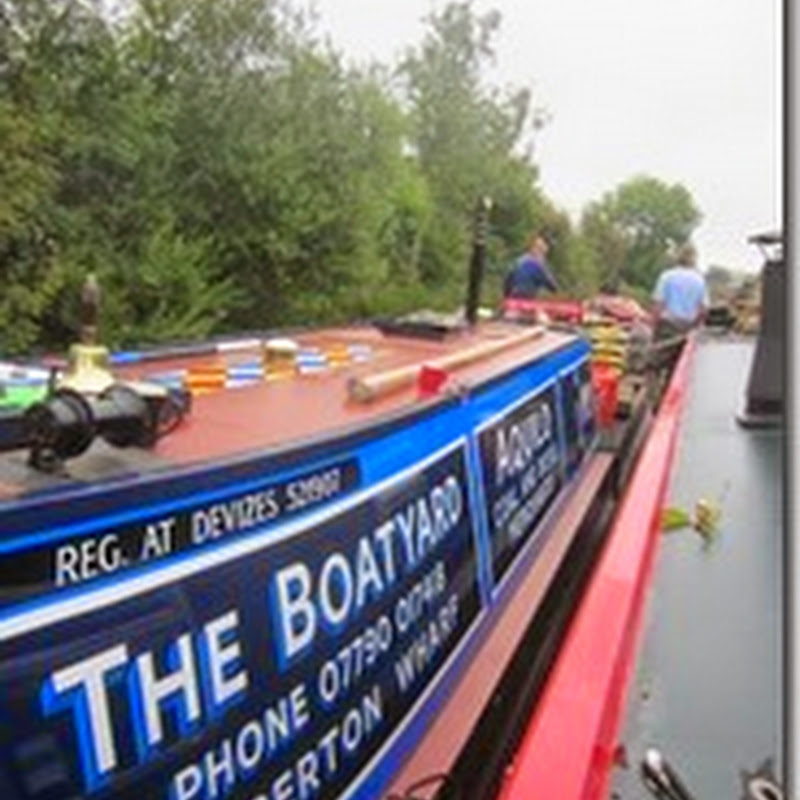
The narrowboat Willawaw is setting off on a journey, physical and spiritual.
If you want to come along, hop on, "let go fore and aft" and welcome aboard...........
If you don't, I'll miss you....
Work on the sequel to 'The Pull of The Tide' has fared rather better than expected and the Kindle edition will be available this month rather than April as originally planned.
Goodreads is an American website for book fans. It doesn't sell anything as such - it is just a great place to find information about books..The Pull of The Tide is now listed there..
"Blow, winds, and crack your cheeks! rage! blow!" ("King Lear")
Why do people write blogs - ego, financial reward, to gain friends and followers ??
Why are blogs so popular - they have spread like dandelions on a grassy verge, but some are as dull as ditchwater.
I often subscribe to their updates because they look promising, only to be regaled with daily tales of "got up, looked out of the window and cleaned my teeth".
Ely - its quite appropriate that the Revelation and the start of the journey should occur in the Fenland city of Ely - in the shadow of the "Ship of the Fens", a name often used to describe its gothic cathedral.
A journey ? - Where are we going ?
I've no idea - all the best journeys have no destination.
Shropshire (wind)lass: Day 2
-
It rained quite a bit yesterday evening and was also very windy. The trees
at the Marbury moorings kept dropping pine cones onto the roof! We woke up
t...
Home moorings
-
We were away about 10, the ex working boats had been going by since about
6AM. We continued North through Newbold Tunnel meeting a boat who waited at
the...
2025 Cruising begins Banbury to Birmingham
-
Sunday 22 June 2025
We hadn't been put in the boat this year yet. We need to be in Birmingham
in early July as we have booked ourselves into another BCN...
A short break
-
June 25th
We did manage to get away, not to Yorkshire, but 'down south' to Dorset.
We had good news last week, all clear with Ian's scan. Oh, actually ...
Dawn Raid on Herbie nearly goes well
-
The battle to restore Herbie's paintwork goes on despite entirely
unsuitable weather. Last week's heatwave would have fried the paint as
soon as it to...
Five Years Later......
-
How astonishing.
I was only thinking this morning that I really should have a look at the
old WB Pippin blog, just to see if I can access it at all.
T...
Road Trip
-
After receiving an invitation to attend a 50th Anniversary Reunion in
Canberra ACT I decided to make an outback trip of the journey and drive
across. I...
All Change!
-
Well, life has a funny way of completely changing in the blink of an eye.
Without going into lots of detail Alan and I have sadly parted ways. I
never e...
Bye bye Platinum Fox
-
Friday 23rd May 2025
A visit to Ely
We handed back the tidy boat just after 9am. As soon as we were off she was
moved round to the engineering dock to ...
Gosty Hill Tunnel
-
* Gosty Hill Tunnel *
One of two very narrow tunnels on there Dudley No2 Canal. The longer one at
Lapal collapsed in the early 1900's but its smaller sis...
Climate change, climate bullshit
-
Open sidebar
[image: The Epoch Times]
Open si
Trillions Spent on ‘Climate Change’ Based on Faulty Temperature Data,
Climate Experts Say
7875
1403
[image:...
Phases
-
In the end, selling Erin Mae is about phases of life. And we have no
reason to complain. In April my best beloved and I celebrated 50 years of
marriage....
Back on the rails
-
I've just spent a most enjoyable long weekend down in Newhaven, and I'm
very pleased to say that the train journey, both ways, went without a hitch
(and...
Milestones
-
I took advantage of the lack of traffic on the main road up the Lune
Valley from Lancaster today for a cycle ride to Kirkby Lonsdale and to take
some ph...
Time to move on.
-
Hi Everyone.
Yes it is time to move on. I have been blogging one way or another since
coming onto the water in 2005. This blog began in 2010 after my o...
Really the end.
-
So I had one last trip on the faithful Petroc. Giles joined me to take
the new owners Ralph and Michelle, on a familiarisation trip from Cropredy
to ...
2021
-
This blog has not been updated in a long time. I have still been boating,
just not really blogging about it. Silhouette is 25 years old and as a
group of o...
Settling Into Oregon
-
*"All that we see and seem is but a dream within a dream." ~Edgar Allen
Poe; American Writer, editor, and literary critic (1809-1849)*
I've been living ...
Bruce Napier RIP
-
I am very sad to tell all Bruce’s followers that he passed away peacefully
yesterday afternoon.
He was admitted to the Royal Derby Hospital on 2/1/2020 and...
Batteries replaced and recycled
-
It's the time of the year when temperatures begin to drop and batteries
struggle. As I reported on our recent Autumn Cruise, our stater battery
failed as w...
2019 in a nutshell
-
Boxing day to 8th January 2019 was spent rushing my boat down south for
Small Boy to live on it AGAIN while he finished his Drama Degree.
February, March a...
The Odyssey 2019: Day 10 – Part 3
-
Sandbank by RAF No. 4 to the Nene I really enjoyed our time on the beach,
but all too quickly the tide turned and we had to head back to sea. This
proved t...
its still raining
-
Well we are back in the metropolitan borough of Runaway bay Having now
given it nearly two weeks to stop raining, Bit of a tall tale it hasnt
rained all t...
Narrow Boat Art
-
While on our last trip to Foxton, and in the Foxton Locks Inn, I found
this framed painting of two narrow boats. I'd admired it in the past and
this time ...
A Busy Year Of Travel.
-
My last post - on the 27th August 2018, related to our fabulous P&O Cruises
visit to the Scandinavian Capitals of the Baltic including St. Petersburg
for a...
Back home home
-
Mr Well is delighted that the day is over. He hates locks. But he loves
boating!!! This trip really reinforced how much he loves the cruising. As
soon as t...
£6.85m to British Canoeing
-
*Caroline Lucas MP* Green, Brighton
To ask the Secretary of State for *Digital, Culture, Media and Sport*, what
recent steps he has taken to support incre...
-
Whoop whoop, launch day is here...
Well it was a while ago but I'm still a long way behind with the blog.
There's a few vid clips here that should ta...
The End Is Nigh!!!
-
I went to London on Friday 5th October to see the oncologist for a routine
check up and chat, she said that I appeared to be getting worse so she sent
me ...
My Blog Has Been Plagiarised
-
I have just found the total contents of my blog has been copied using
everything on the site other than my bloglist. It has a different www.
address and ...
Summertime
-
Bryn and Olly have been enjoying their daily dunks in the river Lymm. I
have missed not being on the boat this summer. But I remember how scorching
it wa...
Dubai, Muscat, Petra, Herculaneum and Vesuvius
-
[image: P1000663]
After flying out to Dubai we had four nights there before embarking on the
P&O “Arcadia” for a cruise back to Southampton. Having been ...
Samsung SCX-3200 Treiber Drucker Download
-
Der Samsung SCX-3200 ist ein zuverlässiger Drucker, Scanner und Kopierer,
der beeindruckende 1200x1200 Druck- und Kopierauflösungen und präzise
gescannte B...
OVERGROUND, UNDERGROUND WOMBERLING FREE
-
As mentioned in my previous blog about Dudley Tunnel, its very being was
due mainly to the vast quantity of Limestone that Dudley, Wrens Nest and
Mons hil...
First Trip from Hatherton
-
Having moved *Zindagi* to Hatherton Marina in early October, we knew that
we would need to get up there again soon to prepare the boat for the colder
mont...
I have deactivated my Facebook account
-
Some of our readers know that I have terminal cancer. It is a shock to me
and all my friends and family.
That is why I have closed down my Facebook accoun...
Carpet Cleaning: twelve Things To grasp
-
Carpets, there in all of our properties. Not surprisingly it’s a on
condition that in some unspecified time in the future you will end up
executing some ...
-
Captains Log Canal Date 25th April 2017
Cookley to Gloucester Sharpness Canal.
Well, after doing all that work on the camper we eventually set sail ...
Bosworth Marina Winter 2016/17 # 9
-
*Bosworth Marina Winter 2016/17 # 9*
Wednesday 14th December to Saturday 24th December
Wednesday 14th December
We planned on doing a bit of running arou...
-
Following a visit from an old friend from Canada, who complained that this
blog had gone dormant, I am reactivating it ASAP so hopefully more news
about Ba...
Little darling
-
This is Soli, new to boating but taking it in his leapy stride.
Soli is from the greek island of Chios. He needs a step to get in and out
of the bo...
Kennet & Avon V (Bedwyn to Teddington)
-
Putting posts together takes ages - I'd forgotten. I think Sarah on Chertsey
has the right idea - the briefest of notes, daily, to be fleshed out later,
Pe...
Download Now You See Me 2 (2016) Full Movie
-
*Download Now You See Me 2 (2016) Full Movie* | One year after outwitting
the FBI and winning the public's adulation with their Robin Hood-style
magic spec...
Holidays Day 1..2... whatever
-
Time to dust the old blogger scape down and get blogging about my holidays.
HOLIDAYS! A REAL HOLIDAY! I LOVE holidays and I am loving this holiday.
Once I...
Farewell
-
*It is a fact of life that we cannot predict the future, even the near
future. The things we take for granted today could all be different
tomorrow. It’...
Nb Windsong is for sale…..
-
Unfortunately, due to family circumstances, we have had to make the
difficult decision to sell Nb Windsong. If anyone out there is interested
in buying he...
-
ALL in united states
World T0ur. With the Statue of Liberty as a national icon, the United
States is widely known as the Land of Liberty. Over the last fe...
Moving on, at last.
-
So the dental work is all finished and I now have a smile like a filmstar:
Richard Kiel.
We set out from Wigram's last Thursday and it has been travel alter...
Birmingham, first time this year
-
We made our way to Norbury on Friday afternoon and ended up moored right at
the end of the visitor moorings but managed to edge our way back to a
better sp...
on the Kennet and Avon canal
-
Yes at last we are out and about it is good to be out on the cut again and
we really enjoying the K&A
we have seen some old friends and met new ones ,
a...
Down Caen Hill.
-
[image: IMG_0192a] [image: IMG_0197] [image: IMG_0227]
Alas our time was up and we wanted to reverse onto the water point and it
was drizzling with rain....
Food Science Scholarships
-
A. N. Whitehead thinks that religious symbols endow human with the food
science scholarships to reform nature. The influences of religion and
science tha...
A Short Catch Up
-
Only a couple of quick visits to Trudy-Ann over the last few weeks, mainly
to check that there was no damage after the high winds.
Replaced the stern line ...
Instamarch.
-
Photos by me.Two sides of March in the form of Instagram squares. And as
we are approaching the prettiest season of the year,I say - spring it on!
My Inst...
Audlem
-
The weather forecasters predicted a 'very cold snap', so we hunkered down
in Audlem for 5 days, thinking that Audlem was a good a place as any to be
iced i...
Wootton Rivers to All Cannings
-
After Wootton Rivers our next stop was Pewsey Wharf. The mooring there is
poor but at least we were able to walk into Pewsey to stock up with
provisions...
Our last trip in Doublefracture.
-
Thursday the 21st-August we move through Alrewas,After the quite time at
Fradley we found our selves fourth in a Que for the lock on to the river
section. ...
Atalanta For Sale
-
Small Woolwich Butty Atalanta for sale £25k Having moved off the boats we
are now selling Atalanta. We orginally bought the butty so we had more
living spa...
Mouzay
-
We loved it outside the sleepy village of Mouzay and ended up staying for a
week. Unfortunately, we haven’t had an internet signal since we left there
so I...
Leaving Liverpool going south
-
*Thursday 3rd July* We had filled the tank from the fuel barge on Wednesday
and topped up our water tank and ensured the flowers were watered too. We
cast ...
Come and visit us on Wordpress - our new blog!
-
We had an email recently from a blog follower saying he hadn't realised
we'd moved our blog somewhere else - he'd been wondering why we hadn't
posted on th...
Bon Voyage Rock 'n' Roll
-
Well, today's the day!
This is the last sighting for me as I take Molly home as she's not well
(more later). George follows them out of the ma...
It's Gone.
-
7th November 2013
Poole, Dorset.
On Tuesday we completed the sale of *No Direction *with the handover of the
boat at Kings Bromley to the new owner Marcus...
Jandai is Sold
-
hello
Thought I would just let you all know that Jandai is sold. I cannot
describe how I feel about it, so I'm not going to try.
I am now truly land-base...
Not much Boating
-
We have been suffering health problems this year. This has meant several
visits to hospitals, nurses, doctors for both of us. This meant very little
time a...
Archive Blog
-
This blog is the archive of our five years of adventures on narrowboat
Lucky Duck from looking for a boat to buying, living on, cruising, doing
up, and fin...
Five years on
-
Several new jobs, and a move overseas, have all played havoc with our time
spent on board North Star.
Five years after buying North Star, we are nearly comp...
That's all folks!!!!!!!!!
-
Some of you may have heard that Piston Broke has been sold and tomorrow
(Wednesday) is moving day. We have been busy packing and now the boat has a
bit o...
Marsworth to Brentford
-
After a wet free Tuesday at Marsworth, on Wednesday 29 May Ebony woke me
early, as usual, at 6am. The sky was fairly good and the forecast was for
rain at...
-
Sad to say we have sailed our last in Enigma.
After 10 years exploring the English (and Welsh) canal system, my ill
health last year forced us to put Enig...
FAREWELL SKYY
-
THURSDAY 6TH JUNE 2013
Along time since the last blog post and a lot of water has passed under the
proverbial bridge. Our last cruise in SKYY in 2012 was t...
In to Liverpool
-
The trip down to Liverpool is bit of a disappointment. As soon as you
reach Bridge 9 things change. On one side its all countryside and the the
canal i...
Goodbye to Star
-
Sadly after five years of glorious cruising to almost every point in the
canal network Star has been sold and we have moved onto Narrowboat Harry –
a sort ...
My fridge door
-
I appreciate the need to blame someone for the ills of our society during
an economic downturn. History is littered with examples and it's a well
documente...
And so the reminiscing begins...
-
I threatened in my last post that I'd start reviewing our life aboard this
boat and thought I better honour that promise. This post comes from a blog
I wr...
Waterlily is now with her new owners
-
It was a happy and sad day today as we completed the sale on Waterlily. We
met her new owners at Great Haywood and completed the paperwork. So
Waterlily is...
Monday 17 September 2012
-
Braunston - Napton - Braunston - Home
Yes, we have returned home for a few days, but not before spending several
days in Braunston supporting the local eco...
Grandma Briefs blogs granny buttons
-
What is it about grandmothers and buttons? Grandma’s Briefs is a lovely
blog from America, from a self-described “long-distance grandma navigating
the wate...
Back on the Leeds Liverpool
-
As expected, we didn't do the Ribble Link on Saturday & we were told it
would probably be Monday or Tuesday but there was an 20% chance that it
could be Su...
Painting of the interior hull structure
-
After stripping out and removing all the interior including wall
partitions, side panels and ceiling panels sometime ago, the L shaped
structure of the hul...
Back on board...
-
It's been a good a while since I've blogged about the boat, however now is
a good time. 'Thursdays Child' was sold about a year ago to a lov...
-
07.05.2012
The boating season is starting in earnest, keep up to date with pictures of
our trips throughout 2012. We don't have enough leave for a fortnigh...
Paint, paint and more paint...
-
Yup, there's been a couple of days of endless painting - on the inside... [image:
:-)]
After Friday's good weather, allowing for the outside painting and ...
Barge Roof is ON!
-
Well after a winter of discontent due to high winds, rain, and a bit of
snow, Hopper 11 now has a shiny new roof to protect him from the elements!
From f...
Maybe again
-
I am thinking I really should start blogging again as I suddenly feel i
have something to say...
Its been the first winter on Baldock and things have gone ...
Job Done!!!
-
"Who is this motley crew waving paint brushes?" you enquire. "Is that the
Old Boater in the middle?" You are not wrong. There he is with Herself (on
the l...
The adventure ends
-
One adventure ends, another begins. On 15 December we delivered NB Lazy
Days to Hilperton where she is up for sale. On 17 December we moved into
our new ho...
Nicholsons Updates Disbanded
-
We have decided to close down the Nicholsons Updates site.
Some time ago, we reported that we weren't getting the feedback from canal
users and it was de...
September Adventures
-
After gearing ourselves up to tackle the Leeds Liverpool canal, we
discovered BW were doing maintenance on one of the locks, and had no
official completion...
Storm in a teacup on the Heath
-
My sister Vanessa, aka London Dreamtime, ran a women-only true stories
evening on the Heath on Saturday in conjunction with Storm in a Teacup.
Eight women ...
Finishing off bits
-
The little bits that make a boat looked lived in always seem to take ages
to make, like the rail to hang the oil bottles on. Forgeing the ends flat
and ben...
Boat for Rent?
-
You will see that I haven't blogged on K2 for a year... I have been on her
about 6 times in the year, all for a days cruise that generally went to
Hillmort...
June 3rd
-
Many apologies for such a delay since I last wrote.
School and its busyness has kept me quiet. So too has the wish to keep calm
and patient.
What has happ...
A New Chapter Begins!
-
Well, we have just become a two boat family, having just bought the former
Working Boat, then Ice-Breaker, then Tug, named SICKLE.
Current plans are to kee...
The end of a chapter..
-
I first have to apologise to everyone who reads my blog that I have not
written for a very long while. When I last wrote, we were at Whixall Marina
heading...
The Last Post
-
And as the Sun sets slowly in the West, in the distance the rhythmic beat
of the Bolinder faded into the evening sky until it could be heard no more
only t...
Goodbye!
-
Sunday 10 April 2011
A monumental decision has been reached. We are going to sell Martlet; we
had intended so to do at the end of the summer. We will be buy...
Chi-Cheemaun sold
-
Hi fellow boaters we have now sold our boat and moved on to land and now
getting used to the room not rocking and I don't have to empty the loo and
get i...
It's a hard life,but lovin' it.
-
Well I know it's been a while,but it's not everyday I can get a strong
enough signal to get online. I'm still on board Caberfeidh and loving every
minute o...
-
*NEW BLOG. NEW BLOG. NEW BLOG*.
*If anyone is interested we will be starting a new Blog about life after
Ubique*
*here.*
http://lifeafterubique.blogsp...
An update on t'engine
-
No sooner had I created the last post did an email arrive about Lola. She
is still stuck in the dock, so thats not too bad given the weather. The
engine ...
Drydock Prep
-
I thought I would put up a quick post as its been awhile.
Emilyanne is due to go into drydock on sunday (14th) and his to have her
engine and boiler remove...
Holding The Baby
-
We were recently charged with the responsibility of taking care of our baby
grandson Callum, for a few days while his mum took a break.
Although we embarke...
More Ramblings
-
Since the last witterings, we moved on up the Staffs & Worcester canal to
Great Heywood for a few days, whilst there we met up with Eric and Elsie on
Bendi...
1 Year Old
-
8th July was Lilians 1st birthday.
We had a bit of a barbeque on the saturday afternoon to celebrate with
family and friends.
Our special thanks to Glyn, ...
Tales from above a Norfolk Village
-
Well I had had no work for ages. I was just beginning to think I had better
make friends with those bin men again, as they may be able to find some
scraps...
I've moved
-
Hello and welcome to the archived nbWarrior blog.
To read about my recent doings, please look at my new blog:
www.chertsey130.blogspot.com
Here on nbWarr...
Braunston
-
Some days last week were abominable, wind, rain, cold. But we had a very
enjoyable time staying put at Newbold on Avon. We had a great spot at the
southern...
.....the End
-
We made it.
After 3 months, 270 hours of chugging and 300 + locks ( can't be bothered
to count), Moondaisy is at her new home . Bill Fen Marina has b...
New Waters
-
A view of Burnley from the 'mile long' (well nearly a mile long)
embankement that goes through the town centre
Tuesday was really sunny so Jon was inspired...
Tuesday 30th June 2009
-
*Hertford Link (which avoids Limehouse Basin) Popular moorings for
live-aboards.*
We had an early start and left our mooring at 0715hrs to try to get a few...
Hello and welcome
-
Hi , I am starting this blog to try and keep a record of sorts about the
narrowboat we have just bought.
Well our introduction to boating started last A...
Stern Doors and plans
-
The stern doors have now been fitted and look very nice, in retaliation the
side hatch has decided to leak with vengeance over the last week. Oh well,
up w...
It ends
-
Kensal Green to Battlebridge Basin, 5 miles, 4 locks
So is was it then. The day when surely I must finally get 'home'. The sky
was grey, but in a good way ...